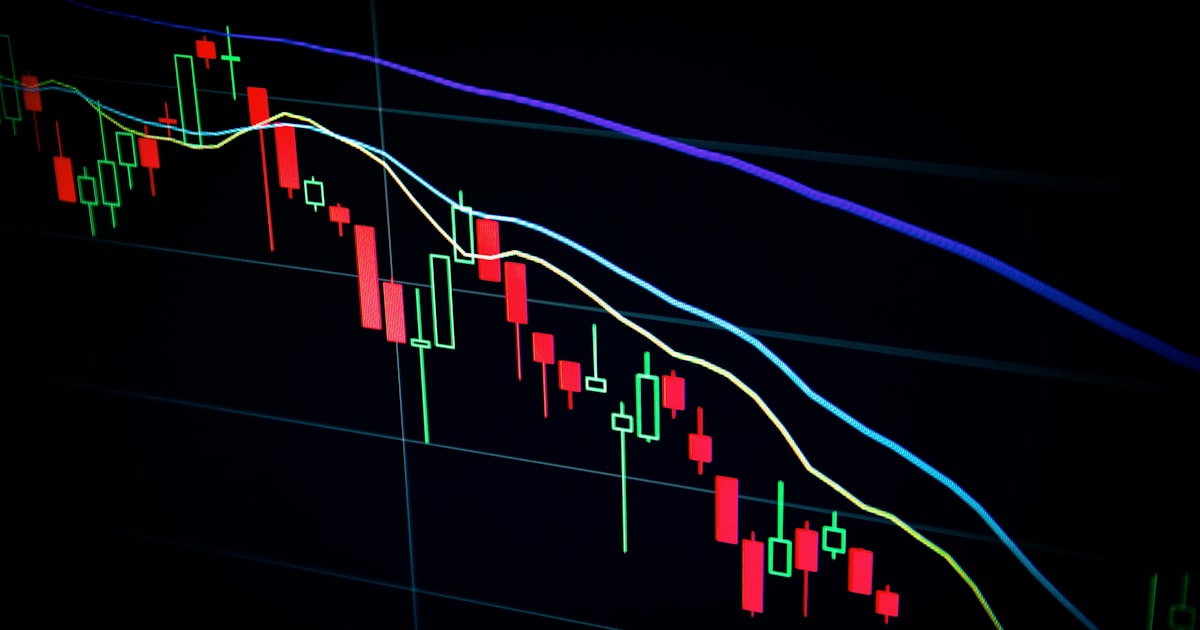
The Economics of Energy Arbitrage: Turning Price Volatility Into Profit
Electricity prices are becoming increasingly volatile. The growth of renewable energy, changing demand patterns, and evolving market structures have created price swings that would have been unthinkable a decade ago. For those with battery storage assets, this volatility is not a problem — it is a profit opportunity.
Understanding Energy Arbitrage
Energy arbitrage is conceptually simple: buy electricity when it is cheap, store it, and sell it when it is expensive. The profit is the price spread between purchase and sale, minus efficiency losses and operating costs.
In practice, arbitrage requires:
- Access to wholesale electricity markets (day-ahead, intraday, or balancing)
- Battery storage with sufficient capacity and cycle capability
- Intelligent software that forecasts prices and optimizes charge/discharge schedules
- Grid connection with metering that supports bidirectional energy flow
"In Q3 2024, day-ahead electricity prices in Germany swung from -EUR 50/MWh to +EUR 400/MWh within a single week. That kind of volatility creates extraordinary arbitrage opportunities."
Why Price Volatility Is Increasing
Several structural factors are driving wider price spreads in electricity markets:
1. Renewable Energy Growth
Solar and wind generation are inherently variable. When the sun shines and wind blows simultaneously, electricity supply can massively exceed demand, pushing prices to zero or even negative. When renewable output drops, conventional generators must ramp up quickly, driving prices sharply higher.
2. Changing Demand Patterns
Electrification of transport and heating is creating new demand peaks. EV charging in the evening, heat pump operation in winter mornings, and industrial process shifts are reshaping load curves in ways that increase price volatility.
3. Retirement of Baseload Generation
As coal and nuclear plants close across Europe, the generation mix becomes more variable. Fewer always-on baseload plants means greater price sensitivity to changes in supply and demand.
4. Market Coupling and Interconnection
Cross-border electricity trading means that weather patterns and supply disruptions in one country ripple across interconnected markets, amplifying price movements.
The Mechanics of Battery Arbitrage
Day-Ahead Market Strategy
The most straightforward arbitrage strategy operates in the day-ahead auction market:
- At noon each day, analyze price forecasts for the following day's 24 hourly periods
- Identify the cheapest hours (typically overnight, 01:00–06:00) for charging
- Identify the most expensive hours (typically late afternoon, 17:00–20:00) for discharging
- Submit bids and offers through your market access platform
- Execute the schedule the following day
Intraday Market Optimization
Intraday markets trade closer to real-time and often exhibit higher volatility than day-ahead markets. A sophisticated arbitrage controller will:
- Continuously monitor intraday price movements
- Adjust the discharge schedule if more profitable opportunities emerge
- Capture short-term price spikes caused by forecast errors or plant outages
- Trade multiple times per day to maximize total revenue
Balancing Market Participation
The balancing market (where grid operators procure last-resort flexibility) offers the highest per-MWh prices but with less predictable dispatch. Battery systems can earn premium rates by being available for short-notice activation.
Real-World Economics
Let us model the economics of a 1 MWh battery system dedicated to energy arbitrage in a Central European market.
Key Assumptions
| Parameter | Value |
|---|---|
| Battery capacity | 1,000 kWh usable |
| Round-trip efficiency | 92% |
| Cycles per year | 365 (one full cycle per day) |
| Average price spread | EUR 65/MWh |
| Battery system cost | EUR 250,000 (all-in) |
| Annual O&M cost | EUR 5,000 (2% of capital) |
| Battery degradation | 2.5% capacity per year |
| System lifetime | 15 years |
Annual Revenue Calculation
Gross revenue per cycle = 1,000 kWh × EUR 65/MWh × 0.92 (efficiency) = EUR 59.80
Annual gross revenue = EUR 59.80 × 365 = EUR 21,827
But this is a conservative base case. In reality, smart arbitrage controllers significantly outperform simple peak/off-peak strategies:
- Intraday trading premium: +25–40% over day-ahead only
- Price spike capture: +10–20% from volatile days
- Multi-cycle days: Some days allow 1.5–2 full cycles
Realistic annual revenue with optimized trading: EUR 30,000–45,000
Financial Returns
| Metric | Conservative | Optimized |
|---|---|---|
| Annual net revenue | EUR 16,800 | EUR 35,000 |
| Simple payback | 14.9 years | 7.1 years |
| 15-year NPV (8% discount) | -EUR 106,000 | EUR 50,000 |
| IRR | 2.1% | 12.4% |
The numbers tell a clear story: standalone arbitrage with conservative assumptions is marginal, but optimized trading with smart software makes it profitable. And when combined with other revenue streams, the economics improve dramatically.
Revenue Stacking: The Real Business Case
The most successful battery storage projects do not rely on a single revenue stream. They stack multiple value streams to maximize return:
Combined Revenue Model (1 MWh System)
| Revenue Stream | Annual Value | Allocation |
|---|---|---|
| Energy arbitrage | EUR 35,000 | 60% of cycles |
| Frequency regulation (FCR) | EUR 18,000 | 20% of capacity |
| Peak shaving (behind meter) | EUR 8,000 | Coincident use |
| Capacity market payments | EUR 5,000 | Availability-based |
| Total stacked revenue | EUR 66,000 |
With EUR 66,000 annual revenue against EUR 250,000 capital cost, the stacked model achieves:
- Simple payback: 3.8 years
- IRR: 24%
- 15-year NPV: EUR 285,000
This is why the leading battery storage developers focus on software sophistication as much as hardware — the ability to dynamically allocate capacity across revenue streams is where the real value lies.
Market Hotspots for Arbitrage
Not all electricity markets offer equal arbitrage potential. Key factors that create favorable conditions:
High-Opportunity Markets
- Germany — High renewable penetration creates frequent negative pricing and extreme peaks. Average daily spread of EUR 60–90/MWh.
- United Kingdom — Active balancing market with premium prices for fast-response assets. Spreads of GBP 50–80/MWh.
- Spain/Portugal (MIBEL) — Growing solar capacity creates midday price crashes and evening peaks. Spreads of EUR 40–70/MWh.
- Australia (NEM) — Extreme price volatility with 5-minute settlement. Spreads can exceed AUD 200/MWh on volatile days.
What Makes a Market Attractive
- High renewable penetration (creates low/negative price periods)
- Limited existing storage (less competition for arbitrage spreads)
- Transparent wholesale markets with accessible bidding platforms
- Supportive regulatory framework for storage participation
- Significant demand charges for behind-the-meter value stacking
Risk Factors and Mitigation
Energy arbitrage is not risk-free. Key risks to manage:
- Price spread compression — As more storage enters the market, spreads may narrow. Mitigate by diversifying across revenue streams and markets.
- Regulatory changes — Market rules can change, affecting revenue. Stay engaged with industry associations and regulators.
- Battery degradation — Frequent cycling accelerates aging. Use intelligent cycling strategies that balance revenue against battery wear.
- Forecast accuracy — Revenue depends on predicting price movements. Invest in best-in-class forecasting software.
- Counterparty risk — Ensure your market access provider and aggregator are creditworthy and properly licensed.
Getting Started with Energy Arbitrage
For organizations considering energy arbitrage as a revenue stream, we recommend the following approach:
- Assess your market — Analyze historical price data for your target wholesale market. Calculate average daily spreads, frequency of extreme events, and seasonal patterns.
- Model the economics — Build a detailed financial model incorporating realistic efficiency, degradation, and O&M assumptions. Model multiple revenue streams, not just arbitrage.
- Choose the right hardware — Select battery systems rated for daily cycling with high round-trip efficiency and robust thermal management.
- Invest in software — The difference between mediocre and excellent arbitrage returns is almost entirely in software quality.
- Start with stacked revenues — Do not rely on arbitrage alone. Combine with peak shaving, grid services, and other streams from day one.
Explore our energy trading and grid services solutions below to see how we can help you capture arbitrage value from your battery assets.