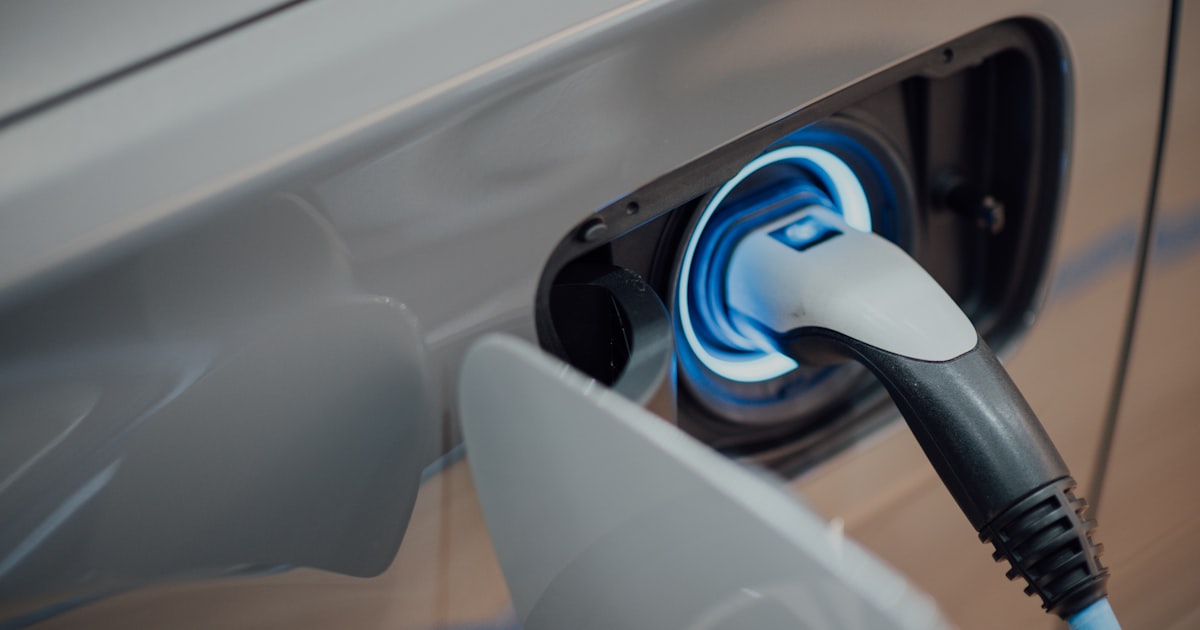
The Rise of Vehicle-to-Grid Technology: How EVs Are Becoming Mobile Power Plants
The relationship between electric vehicles and the power grid is undergoing a fundamental transformation. What was once a one-way street — electricity flowing from grid to vehicle — is becoming a dynamic, bidirectional exchange that could reshape how we think about energy infrastructure.
What Is Vehicle-to-Grid Technology?
Vehicle-to-grid (V2G) technology enables electric vehicles to discharge stored energy back into the electrical grid through bidirectional charging stations. In essence, every parked EV becomes a distributed battery resource that grid operators can tap during periods of high demand or low renewable generation.
The concept is elegantly simple: the average car sits parked for 95% of its lifetime. During those idle hours, the battery — typically 40–100 kWh in modern EVs — can provide valuable grid services rather than simply sitting unused.
"By 2030, the global EV fleet could represent over 50 TWh of mobile storage capacity — more than all stationary grid batteries combined."
How Bidirectional Charging Works
A V2G-capable system consists of three key components:
- Bidirectional charger — Hardware that converts AC grid power to DC for charging and reverses the flow for discharging
- Smart energy management system — Software that orchestrates when to charge, hold, or discharge based on grid signals, electricity prices, and driver needs
- Grid communication interface — Protocols (such as ISO 15118) that enable real-time negotiation between the vehicle, charger, and grid operator
The V2G Communication Stack
| Layer | Function | Protocol |
|---|---|---|
| Grid Operator | Dispatch signals & market clearing | IEC 61850 / OpenADR |
| Aggregation Platform | Fleet management & optimization | OCPP 2.0.1 / OSCP |
| Charger | Power conversion & metering | ISO 15118-20 |
| Vehicle BMS | Battery health & limits | CAN / PLC |
When grid frequency drops below the target (indicating demand exceeds supply), the V2G system responds within milliseconds by injecting power from the EV battery. When frequency rises, the system absorbs excess energy by charging the vehicle.
Revenue Streams for EV Owners
V2G unlocks multiple value streams that can offset vehicle ownership costs:
- Frequency regulation — Providing second-by-second grid balancing (highest value per kWh)
- Peak shaving — Reducing demand charges for commercial buildings with EV fleets
- Energy arbitrage — Charging at off-peak rates and selling back at peak prices
- Emergency backup — Powering homes or businesses during outages (V2H/V2B)
- Renewable integration — Absorbing excess solar/wind generation and dispatching during lulls
Economic Case Study
Consider a fleet of 50 EVs at a commercial depot, each with 60 kWh usable capacity:
- Total fleet storage: 3,000 kWh (3 MWh)
- Available for V2G (at 50% participation): 1,500 kWh
- Frequency regulation revenue: EUR 0.10–0.15/kWh/cycle
- Estimated annual revenue: EUR 25,000–40,000 for the fleet
This revenue stream can reduce the total cost of fleet electrification by 15–25%, making the business case for EVs even more compelling.
Technical Challenges and Solutions
Battery Degradation Concerns
The most common concern about V2G is battery wear. However, modern approaches mitigate this effectively:
- Shallow cycling — V2G typically operates within a 20–80% state-of-charge window, which is actually the optimal range for lithium-ion longevity
- Intelligent scheduling — AI-driven systems minimize unnecessary cycles and prioritize high-value dispatch events
- Thermal management — Advanced liquid-cooled chargers maintain optimal battery temperature during bidirectional operation
Standardization Progress
The industry is converging on key standards that will accelerate adoption:
- ISO 15118-20 — Defines bidirectional power transfer communication between EVs and chargers
- IEC 61851-23 — Covers DC bidirectional charging hardware requirements
- OCPP 2.0.1 — Supports V2G use cases in charging network management
The Grid Impact at Scale
As EV adoption accelerates — the EU targets 30 million EVs by 2030 — the aggregate V2G potential becomes staggering. Even with conservative participation rates:
- Potential V2G capacity by 2030: 100–200 GW across Europe
- Equivalent to: 50–100 large gas peaker plants that could be decommissioned
- CO2 reduction: Enabling higher renewable penetration by providing flexible storage
Grid operators are already preparing. Major European TSOs are updating their market rules to accommodate mobile storage resources, and several pilot programs have demonstrated that EV fleets can respond faster and more accurately than traditional power plants in frequency regulation markets.
What This Means for Your Business
For organizations investing in EV charging infrastructure, V2G capability is no longer a future consideration — it's a present opportunity. The key steps to prepare are:
- Choose V2G-ready charging hardware from the start, even if bidirectional features aren't activated immediately
- Partner with an aggregation platform that can manage the complexity of fleet scheduling and market participation
- Integrate energy management software that optimizes across V2G, self-consumption, and grid services
- Assess your grid connection — V2G works best with adequate grid capacity and smart metering in place
The convergence of falling battery costs, maturing V2G standards, and evolving grid service markets creates a compelling opportunity for early movers. The question is no longer if V2G will become mainstream, but how quickly organizations will capture its value.
Interested in V2G-ready charging solutions? Explore our DC fast chargers and grid integration products below.